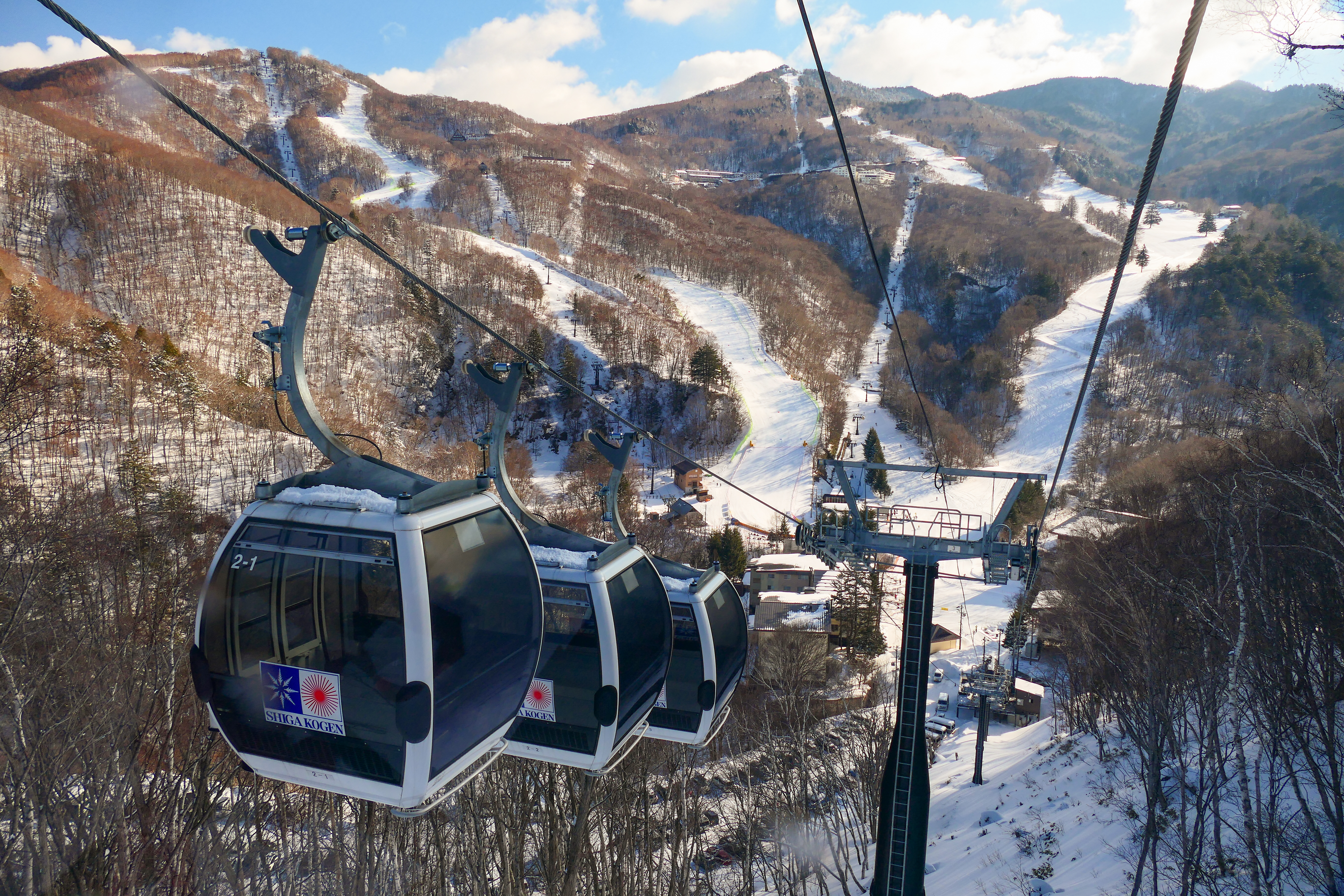
SHIGA KOGEN JAPAN
Shiga Kogen Resort Guide
Shiga Kogen is Japan’s largest ski resort — not one mountain but 18 individually named ski areas spread across a high plateau inside Joshin’etsu Kogen National Park, Nagano Prefecture, all covered by a single lift pass. Canyons runs English-language Shiga Kogen Ski School lessons across several of these areas, and this guide breaks down how the resort is laid out, which areas suit which skiers, and how to get there from Tokyo.
Already sure which zone you want? See our guide to where to stay and eat in Shiga Kogen for hotels by base area, dining, and onsen.
Key Takeaways
Japan’s largest ski area: 18 separate ski areas grouped into five zones — Central, Yakebitaiyama, Okushiga Kogen, Kumanoyu, and Yokoteyama/Shibutoge — sharing one all-area lift pass.
Also among Japan’s highest ski terrain: the summit of Mt. Yokote reaches 2,307 metres, and Yakebitaiyama's Olympic Trail hosted alpine and snowboard events at the 1998 Nagano Winter Olympics.
Two non-connected clusters: Central, Yakebitaiyama and Okushiga Kogen link by lift or by skiing between them. Kumanoyu and Yokoteyama/Shibutoge form a separate cluster reached by shuttle bus or car.
Access: Hokuriku Shinkansen from Tokyo to Nagano Station (around 80–110 minutes), then the direct Snow Monkey/Shiga Kogen express bus (about 45 minutes to the base areas).
Jigokudani Snow Monkey Park sits on the same road up to Shiga Kogen, so a morning with the monkeys and an afternoon on the slopes is an easy combination.
FAQ for trip planning covers getting here, whether it suits beginners, and where to base yourself — see below.
Overview: How Shiga Kogen Is Laid Out
Shiga Kogen isn’t a single resort in the way Niseko or Hakuba are — it’s 18 separately operated ski areas that have historically run their own lifts and tickets, now unified under one Shiga Kogen Mountain Resort lift pass. That structure is the main thing to understand before you go, since which zone you’re based in determines how much of the resort you can reach without a bus transfer.
The resort splits into two clusters. The first — Central (Ichinose, Terakoya and several smaller connected areas), Yakebitaiyama and Okushiga Kogen — link to each other by lift or by skiing between them. The second cluster, Kumanoyu and Yokoteyama/Shibutoge, is not physically connected to the first and needs the shuttle bus or a car to reach.
Getting There
The Nagaden Snow Monkey/Shiga Kogen express bus leaves from Bus Stop No. 23 at Nagano Station’s east exit and runs year-round, with more departures in winter. Not every bus continues all the way to the upper ski areas, so check the timetable for your base area before booking.
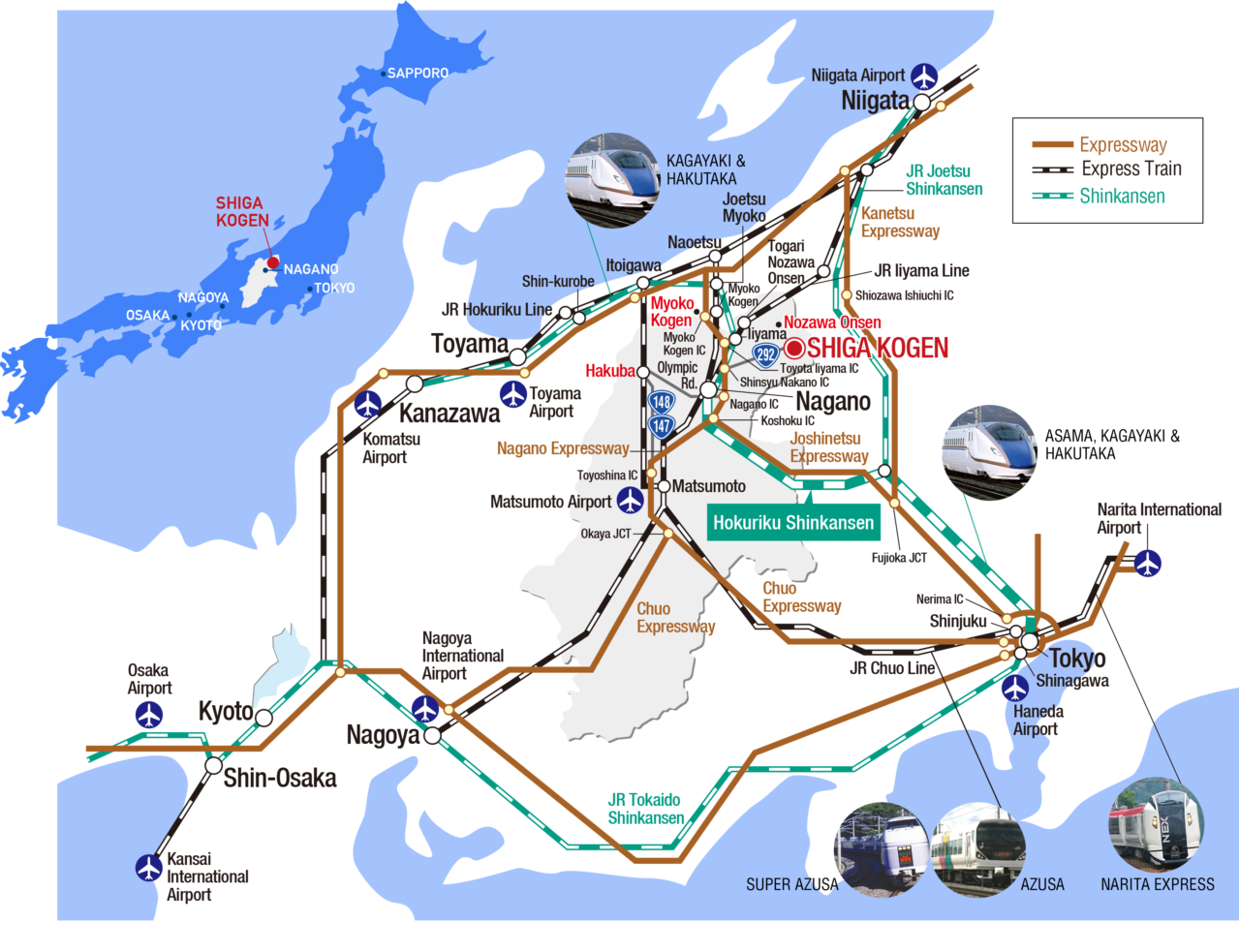
The express bus terminates at Shiga Kogen Yamanoeki, the resort's central bus hub at about 800 metres above the town below and the gateway to the Central cluster. It's a genuinely useful stop, not just a bus shelter — there's a circular bus terminal, free parking within walking distance, a café, a souvenir shop, and Alpina Sports, one of the larger rental shops on the mountain. From Yamanoeki it's a short walk or shuttle hop to Ichinose and Terakoya.
The Main Ski Areas
Below are the areas most visitors and Canyons lesson groups use. All are covered by the all-area Shiga Kogen lift pass; single-area day passes are also sold if you’re only planning to ski one zone. The trail map pictured alongside the Ichinose profile below covers the full connected cluster — useful to have open on your phone as you move between zones.
Ichinose Family Ski Area
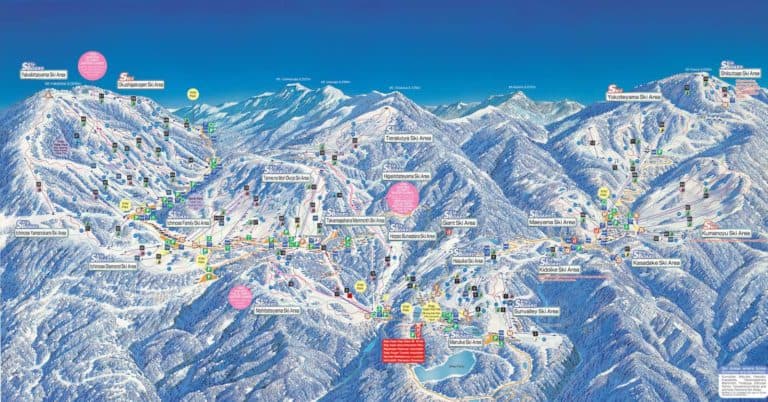
Ichinose is the most central and most beginner-friendly of the Shiga Kogen areas, with two quad lifts and two pair lifts serving mostly gentle, wide runs. It’s the easiest area to reach from the main bus stops and a natural first stop for families or first-time visitors to the resort.
Terakoya Ski Area
Terakoya sits at higher elevation than Ichinose and holds noticeably better snow, with mostly groomed intermediate terrain and a quieter, less crowded feel. It connects directly from Ichinose, making the two an easy pairing for a first day — start on Ichinose’s gentle slopes and move up to Terakoya as confidence builds.
Okushiga Kogen
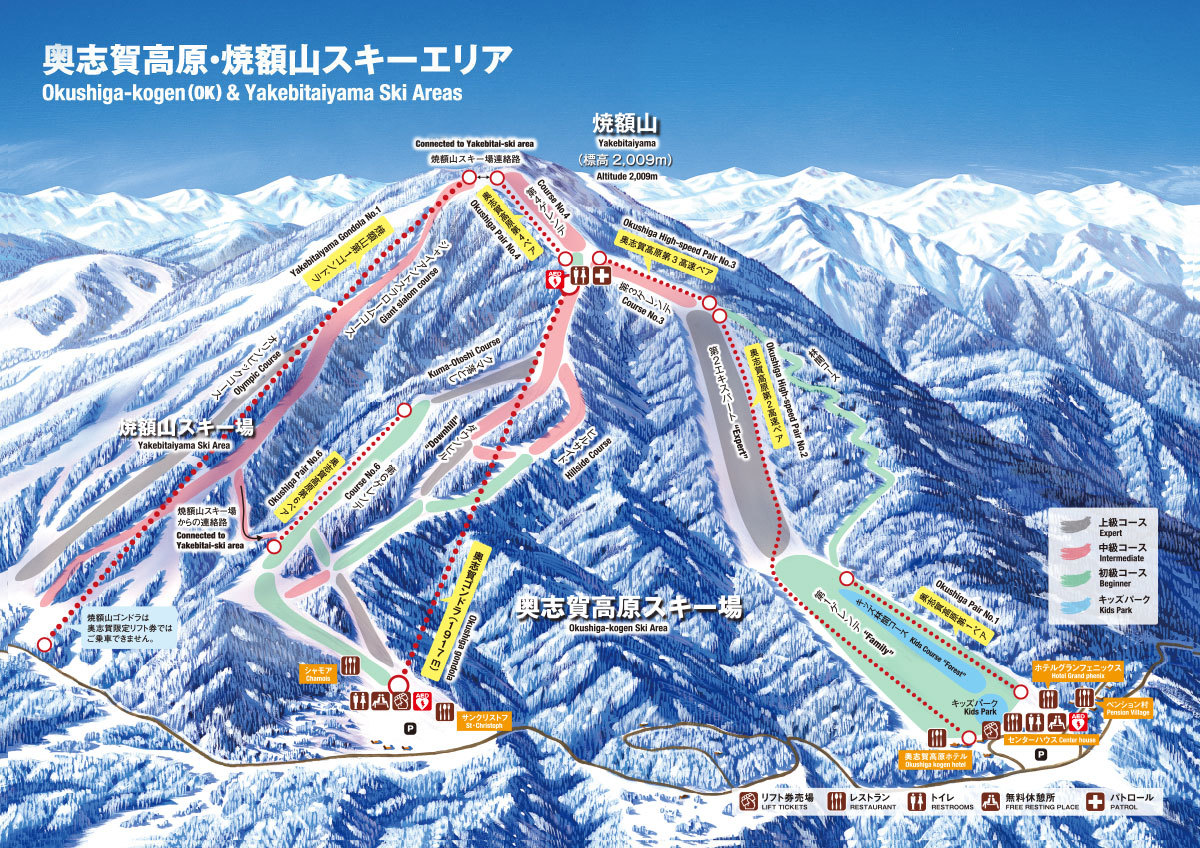
The northernmost area in the connected cluster, Okushiga Kogen sits at higher elevation with north-facing slopes that hold light, dry powder longer than the lower areas. It has a quieter, more spread-out feel and is popular with confident intermediate and advanced skiers looking for fewer crowds.
Yakebitaiyama
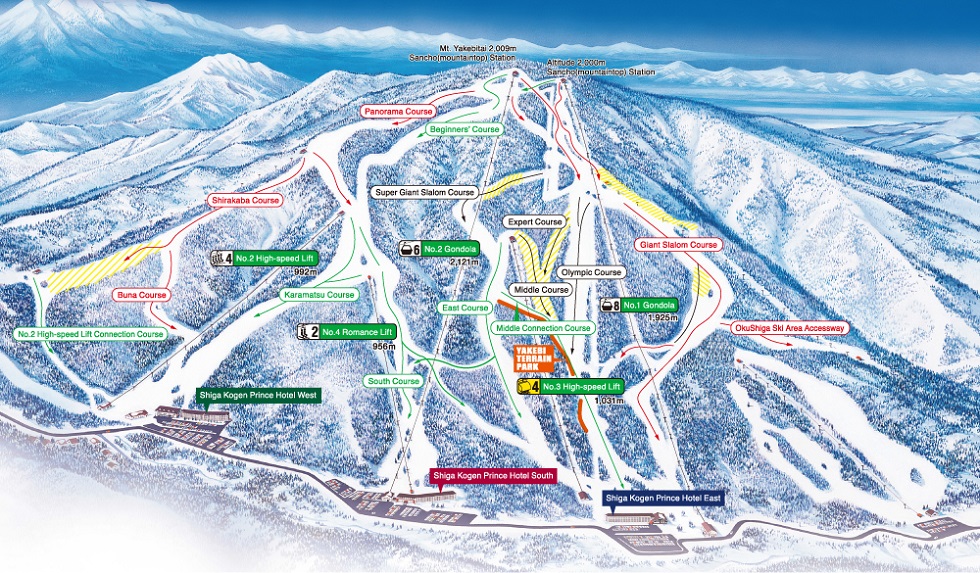
Yakebitaiyama is one of the best-equipped areas in the resort, with high-speed lifts and a mix of long groomed cruisers and steeper pitches. Its courses were used for the 1998 Nagano Winter Olympics and FIS World Cup races, and it remains a favourite with strong intermediate and advanced riders.
More Central Zone Ski Areas
Beyond Ichinose and Terakoya, the Central cluster includes several smaller connected areas, each with its own character:
Sun Valley – one of the first areas reached from the main bus stops, with mellow, beginner-friendly runs.
Ichinose Diamond – a smaller area next to Ichinose Family, with gentle slopes well suited to learners.
Maruike – small and gentle, a good pick for first-time skiers and kids.
Takamagahara Mammoth – open slopes and terrain parks, popular with intermediates.
Higashitateyama – scenic runs and long groomers suited to intermediate skiers.
Giant – steeper terrain with a more local feel, for confident skiers.
Kumanoyu & Yokoteyama/Shibutoge
The second Shiga Kogen cluster — Kumanoyu and Yokoteyama/Shibutoge — sits apart from the main group and is reached by shuttle bus or car rather than by lift. Yokoteyama in particular is known for holding some of the best snow quality in the resort thanks to its exposure, and both areas see noticeably fewer visitors than Ichinose or Yakebitaiyama. Worth the transfer if you’re staying multiple days and want to see a quieter side of Shiga Kogen.
Jigokudani Snow Monkey Park
One thing that sets Shiga Kogen apart from most Japanese ski resorts is what’s on the way up: Jigokudani Yaen-koen, the famous "snow monkey" park where wild Japanese macaques bathe in a steaming hot spring pool, surrounded by snow. It sits just off the same road the Shiga Kogen express bus uses, with a 35–40 minute walk in from the Snow Monkey Park bus stop.
Because the bus that services the ski areas also stops here, it’s straightforward to combine the two: ride up in the morning, walk in to see the monkeys, then continue on to the slopes for the afternoon (or do it in the other order on your way back down).
Where to Stay
Accommodation at Shiga Kogen is spread across the base areas rather than concentrated in one village, so it's worth booking near whichever zone you plan to ski most. See our full Where to Stay & Eat in Shiga Kogen guide for hotels by base area, dining, and onsen.
The Shiga Kogen Prince Hotel (external) has three buildings — East, West, and South — at the base of Yakebitaiyama, each with its own restaurants and direct slope access. Near Ichinose, Ichii Hotel (external) is a ski-in/ski-out option with direct slope access from the front desk — Canyons' Shiga Kogen instructors meet lesson groups nearby.
Lift Passes & Practical Tips
Single-area day passes cost roughly ¥6,500–¥7,000 depending on the zone; an all-area pass covering all 18 ski areas costs more but is worth it if you plan to move between zones.
Decide your base first. If you’re only skiing 1–2 days, pick a single-area pass for whichever zone your hotel is closest to rather than paying for the full resort.
Pack for altitude. Shiga Kogen sits considerably higher than most Nagano-area resorts, so conditions can be colder and windier at the upper lifts even on a mild day in town.
Snow Conditions & Weather
For short-range forecasts (out to about three days), the Japan Meteorological Agency's high-resolution MSM model tends to be the most accurate for Shiga Kogen — view it on Windy, set to the MSM model (external). For a resort-specific outlook further out, see Snow-Forecast: Shiga Kogen (external), which breaks down temperature, snowfall, and wind by elevation.
FAQ
How do I get to Shiga Kogen from Tokyo?
Take the Hokuriku Shinkansen from Tokyo Station to Nagano Station (about 80–110 minutes), then the direct Snow Monkey/Shiga Kogen express bus from the station’s east exit (roughly 45 minutes to the base areas). Door to door, budget around 2.5–3 hours.
Is Shiga Kogen good for beginners?
Yes — areas like Ichinose have gentle, wide beginner terrain, and English-language lessons are available through Canyons’ Shiga Kogen Ski School. More advanced areas like Yakebitaiyama and Okushiga Kogen are better suited to intermediate and advanced skiers.
What to do in Shiga Kogen besides skiing?
Jigokudani Snow Monkey Park is the standout non-ski activity, reachable on the same road as the ski areas. The resort also has several onsen and rest houses for a break between runs.
Where should I stay in Shiga Kogen?
Accommodation is spread across the different base areas rather than one central village, so it’s worth booking near whichever zone (Ichinose/Central, Yakebitaiyama, or Okushiga Kogen) you plan to ski most — see Where to Stay above for specific hotels.
Does Shiga Kogen have night skiing?
Some areas run night skiing during peak season — check the specific area’s schedule, as hours vary by zone and by month.
Need more Information?
Find answers to common questions in our FAQs
Not sure about your ski or snowboard level?
Check our ability level guide to find the right lesson for you
Insurance:
The price of the lesson does not include accident insurance. Please obtain travel insurance to cover snowsports and all participants. We recommend ALL lesson participants have travel insurance.
Lift passes and rental:
Lift tickets and rental are not included in the price and are to be prepared before the lesson start time.
Ready to book?
Submit your booking request here
Please feel free to contact us with any other questions you may have and we will be happy to help at snowsports@canyons.jp